Bodmin Moor 2023 (a bog)

Crumbs

Searching – Not Found
Quiller-Couch, Arthur, and Daphne du Maurier. Castle Dor. Paperback edition. London: J.M. Dent & Sons, 1962. Reprint, London: Virago Press, 1994.
du Maurier, Daphne. The House On The Strand. Paperback edition. London: Victor Gollancz, 1969. Reprint, Harmondsworth: Penguin Books, 1971.
du Maurier, Daphne. Jamaica Inn. London: Gollancz, 1936. Reprint, Virago, 2015.
du Maurier, Daphne. Vanishing Cornwall. First edition. London: Victor Gollancz Limited, 1967.
du Maurier, Daphne. Enchanted Cornwall: Her Pictorial Memoir. Edited by Piers Dudgeon. Paperback edition. 1989. Reprint, London: Penguin Group, 1989.
du Maurier, Daphne. The Rebecca Notebook And Other Memories. Paperback. London: Victor Gollancz Ltd, 1981. Reprint, London: Arrow, 1993.
When the landscape involves wading through literal bullshit, facing rams head-on, negotiating space with herds of wild horses, hopscotching through bogs, electively sleeping rough in rough climates, navigating through fog and crevasses, coming up to the edge of impossible features and fissures to traverse without path or signpost, to find yourself in landscapes that others refuse to cross for a variety of reasons, when neither training or permission factors in (or does) … gaslight comes to mind.
When acetylene and calcium carbide meet water, something powerful hisses and sparks, seemingly erratic but entirely the outcome of a precise balance of specific agents; if the input is not calibrated, the phantasm explodes or is extinguished. Objects appear brilliantly lit or completely invisible, and the brain fills in the gaps between flickers, creating a sense of continuity despite inconsistent illumination. Confident in your own observations, imagination and logic intertwine despite the inconsistent illumination … you are aware of these machinations yet forget them … maybe because you have been played, a trick of the eye and mind to make sense of a world that is impossible to grasp in a true, objective light.
Meanwhile, if another did not produce the same outcome, if their logic and imagination did not line up, if they were unwilling to negotiate or reflect on the refractions of light between people and objects, they were quick to remind you that you had seen it all wrong, understood it all wrong, or even that it did not happen at all.
This flickering illumination becomes systemic not only when institutions determine whose perceptions count as valid … but when a zeitgeist overlays gaps so tightly that no other light gets through.
The meaning is lost? You have bad judgment. Did you fall into a bog and ruin your equipment? Bad judgment. Budgeting more time for breath counting in a fog than for calculating in a lab? Bad judgment. Cannot afford to finish it? Bad judgment.
Nothing really happened. We have come to an end. What can be said about losing track and getting stuck in the mud?
Now, a hand must extend to retrieve you, or you might need to spend all your shekels getting out.
Bad judgment.
Neuroqueer Inquiry
This is a work-in-process, documenting dyspraxis in action. Unconventional syntax and organization are left intact, and updates occur on occasion when new connections or information emerges.


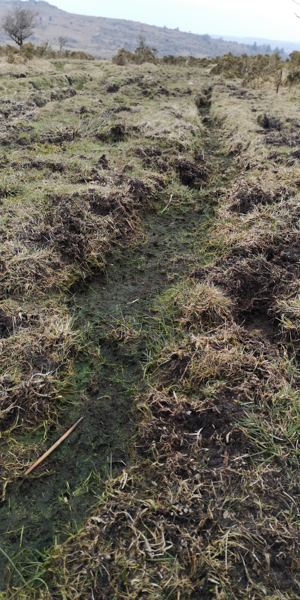
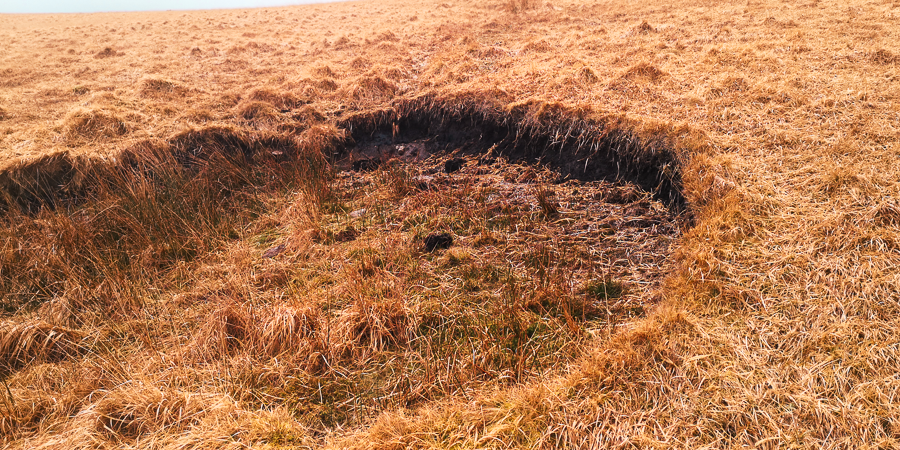
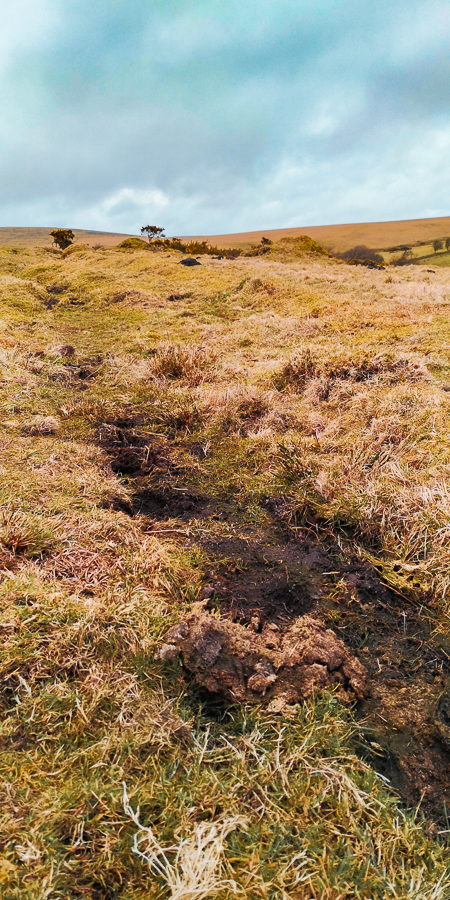
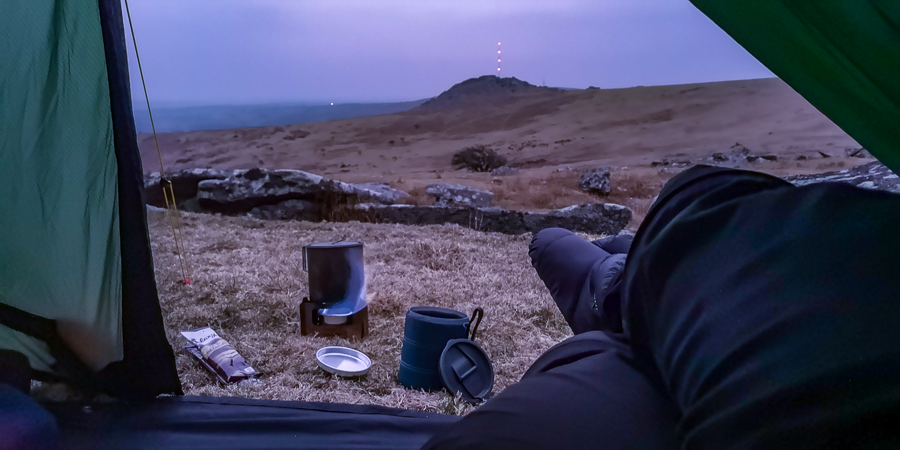
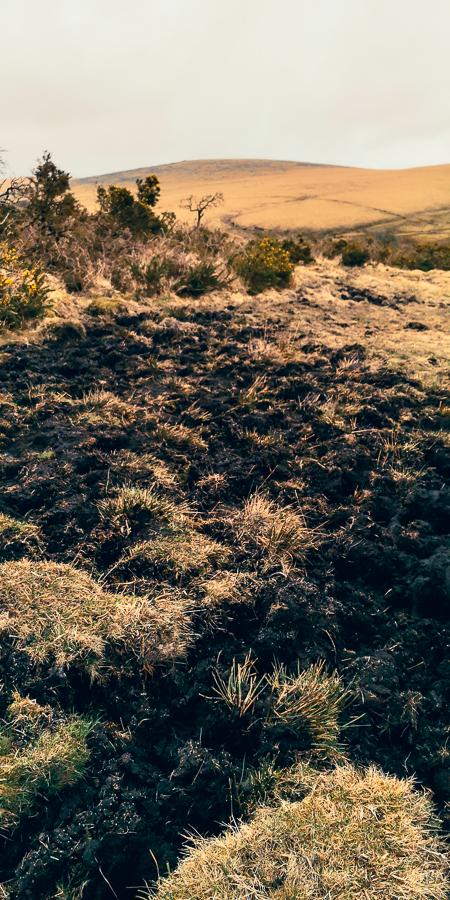
That skill of sleeping rough and navigating inhospitable environments is interpreted as exceptional and to be pitied. Equality of resources only becomes relevant in populated areas and those left to the fields: tramps, farmers, travellers, ravers, become someone else’s embodiment of the failure of a human, of a community, of humanity. If you do not live within the institution with the majority and do not ‘get’ its pathways and walls, you do not require resources distributed within. At least some people spend their time thinking this way.
Perhaps for ‘outsiders’, resources are not required, raising the now institutionalised feminist trope of ‘bodies that matter’. The institution controls healthcare, clean water, food, transportation, and access to hospitable land, all under the auspices of equal access to basic human needs. Therefore, the bodies that matter are those who willingly submit to live inside the institutions that provide them, without considering how the institutions are shaped to distribute resources evenly via terms set by the institution. Once what matters becomes institutionalised, the categories are rearranged and frequently mishandled. Restitution and the redistribution of resources still require a common agreement that those outside the walls will never vote and therefore consent to. Dissent is resistance. Resistance is refusal to participate.
Didn’t I/we decide to live outside the walls? When did I/we/they reject the offer, or were we hijacked and forced into our circumstances?
It all depends on which (trick of the) light you see it in. Gaslight.
We all need basic resources, but ‘accommodation’ is never the right fit. “The gatekeepers always determine who gets them and who does not, and you cannot flatten a playing field when the only one available is formed by conditions constantly shaped by the earth’s responses to humans who are actively or passively disabling it.’
“Bodies that matter.”
But this too is a flicker.
Scarcity mentality, finite resources.
Personal Responsiblity, self-determination, agency.
Common sense, trust your eyes, biological reality … sanctity of the planet.
Flicker.
A flicker like a repetition, grading and grading away the skill of sensing in the fog, in the dark. Confidence is knowing that you will never know, and someone else will always have a different amount of gas to contend with. Yet, you are both there, adjacent, in the same room, the same place, and time.
So there I am, here I am … grateful for a 1980s Californian public education who saw this issue and decided to experiment with the solutions. I learned to sleep rough, understand elevation, find ways around obstacles, look for the hands that are extending, and cope with the perception from others that gaining these skills meant there was some dis/ability en route. Many failed, but at least I gained compass and map-reading skills to get myself through shifting environments without being overly confident that these instruments would always prove right. To know when and where not to trespass and that help may not arrive in time is not the result of bad judgment or institutional limitations, and calling it part of the journey is also not doing justice to the phenomena of knowing and imagining.
What better way to pass the time and pass along a sense of being when your wits, physicality, intellectual capacity, and even spirituality … just being with whatever and whoever you find yourself around … definitely a way to pass the time, or at least a preference for my time.
The view of the big picture is clearly understood as something that can identify the most significant barriers, but not the nuances of navigating through them. The assortment of maps as minute as an atom or as expansive as the extraterrestrial imaging of the International Space Stations and companion satellites, sure, forms a G/g-d trick1which Donna Haraway condemns, immplicating ???? in its Christian right incarnation which seemed much less threatening at the time of crossing Bodmin Moor (or when she wrote it) than it does on the cusp of 2026 when I am editing this … but one so beautiful that it reflects whatever you want to identify as Creation. Our wee brains making sense of the unfathomable, unacceptable … what we can never understand … why not let it be divine, why not let it be One? What harm can the flicker of a gaslight do? Or a zeitgeist. With certainty, I like a little fog.
Forty years later, halfway across the globe.
Bodmin Moor and Southern California are desolate sides of different coins. Cold and damp. Hot and dry. Hidden below the surface is something more, or perhaps nothing at all. Too much water and no water. Big sky, but cannot see ahead. It smells both salty and industrial. A waft of manure came from somewhere in the distance. Many people write about it; they see something that others do not. Regardless, a pervasive myth whose lines may shift, but whose glow lingers.
Here, I know how to sleep.
Citations
- 1which Donna Haraway condemns, immplicating ???? in its Christian right incarnation which seemed much less threatening at the time of crossing Bodmin Moor (or when she wrote it) than it does on the cusp of 2026 when I am editing this