Know thyself, be thyself: Self-Fashioning Hall

Self fashioning iconic Hall
More from…

Radclyffe Hall put effort into shaping herself in every realm she entered: music society, patronage circuits, or the countryside estate. She chose the people, the cut of the jacket, the parish; she chose where to lay her head and what hat could be on it.
Between 1908 and 1913, Marguerite Radclyffe-Hall’s lyrics were published with some of the most prominent sheet-music operations in Edwardian London. A First Sheaf of Little Songs in 1908 and A Second Sheaf of Little Songs in 1909, contained popular ballads, including Take Me With You When You Fly and later, The Blind Ploughman which was not only one of the most popular ballads of its day, but continues to find itself an audience amongst church goers and old timey music fans.1Robert Coningsby Clarke and Marguerite Radclyffe-Hall, ‘The Blind Ploughman’ (London: Chappell & Co., Ltd., 1913). On Chappell publication of the Sheaf volumes and the inclusion of ‘Take Me With You When You Fly’, see Michael Baker, Our Three Selves: The Life of Radclyffe Hall (New York: William Morrow & Company, 1985). On the 1913 Queen’s Hall performance, see Diana Souhami, The Trials of Radclyffe Hall (London: Weidenfeld & Nicolson, 2014). The theme across these collaborations is consistent: pastoral, devotional, romantic.2Hannah Roche, “An ‘Ordinary Novel’: Genre Trouble in Radclyffe Hall’s The Well of Loneliness,” Textual Practice 32, no. 1 (2018): 101–117. Some critics view Hall’s prose as an attempt to place herself into a sphere of normativity, instrumentalising her class and networks to gain social credentials.3Roche, “An ‘Ordinary Novel’.”
Whose image is revealed to all
Great lovers in the loved one’s face,
Whose passion mystical and deep
Kindles the holy fires that sleep
Within the heart’s most secret place.
Whose breath is incense on the shrine
Of earthly love, burning divine
And changeless, through all time and space!
“Prayer” in Songs of Three Counties (1913).
Hall sought not so much to transform how people perceived her, but to transform her own relationship to society. With Mabel Batten, Hall balanced country living and urban social-cultural pursuits – a structure that establishes a circuit of creative professionals who were not exploring the fringe of societal norms but instead were invested in the most aspirational aspects of British national, religious, and class-oriented systems.4For context on these circles see Paul Hopwood, “Polite Patriotism: The Edwardian Gentleman in English Music, 1904 to 1914,” Nineteenth-Century Music Review 16, no. 3 (2019): 383–416. Batten had “sufficient taste and good judgement” according to Troubridge to midwife Hall’s transition from lyrical poet to novelist, as well as the network to validate her sponsorship.5Lady Una Troubridge, The Life and Death of Radclyffe Hall (London: Hammond Hammond, 1961), 39; Baker, Our Three Selves, 58. The patronage circuits established during this time assisted in gathering support instrumental during the trials she is famous for.6Sally Cline, Radclyffe Hall: A Woman Called John (London: Faber & Faber, 1997).
Hall participated in the Edwardian England star machine: A lyricist would typically publish a volume of verses—often at their own expense initially, as Hall did with Twixt Earth and Stars.7Marguerite Radclyffe-Hall, A Sheaf of Verses: Poems (London: John and Edward Bumpus Ltd., 1908); Lovat Dickson, Radclyffe Hall at The Well of Loneliness: A Sapphic Chronicle (London: Collins, 1975), 36. If the verses had strong rhythm and emotional resonance, they were seized upon by established music composers.8Dickson, Radclyffe Hall at The Well of Loneliness, 36, 42; Cline, A Woman Called John, 88. Success meant that these songs were performed across multiple tiers of society. Una Troubridge notes that Hall’s work was widely featured in concerts that were “predecessors of the B.B.C.” and were purchased by “enthusiastic amateurs who performed in the home!”9These claims are unsubstantiated by a cursory search of the indexes of the Athenaeum from 1906–1913. Troubridge, Life and Death of Radclyffe Hall, 28–29. Despite achieving national celebrity and massive sheet-music sales, the financial reality for a lyricist was structurally exploitative and Hall was not exempt.10Richard Dellamora, Radclyffe Hall: A Life in the Writing (Philadelphia: University of Pennsylvania Press, 2011), 51, citing Letter from Chappell & Co. Ltd., 13 June 1918, Lovat Dickson Collection, MG30, D237, vol. 4, folder 11. The publishers argued that lyrics were largely interchangeable and offered only a flat fee—in Hall’s case, twenty guineas for a massive wartime hit. Hall realised that her work was trapped in a context that offered prestige but no financial control. It was at these meetings with publishers that Hall was encouraged to write novels – though whether Hall was excited or intimidated by this prospect is a matter of debate.11Troubridge, Life and Death of Radclyffe Hall, 41; Baker, Our Three Selves, 58.


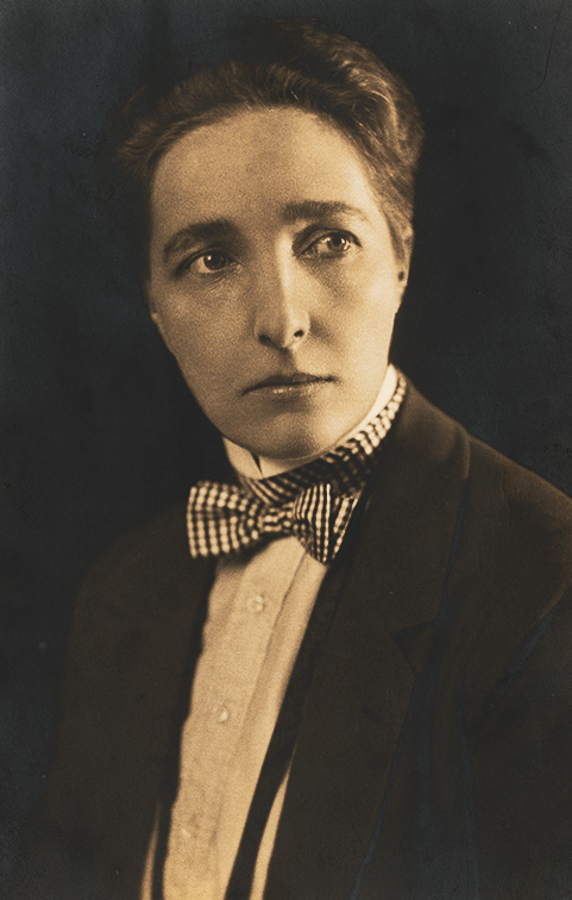
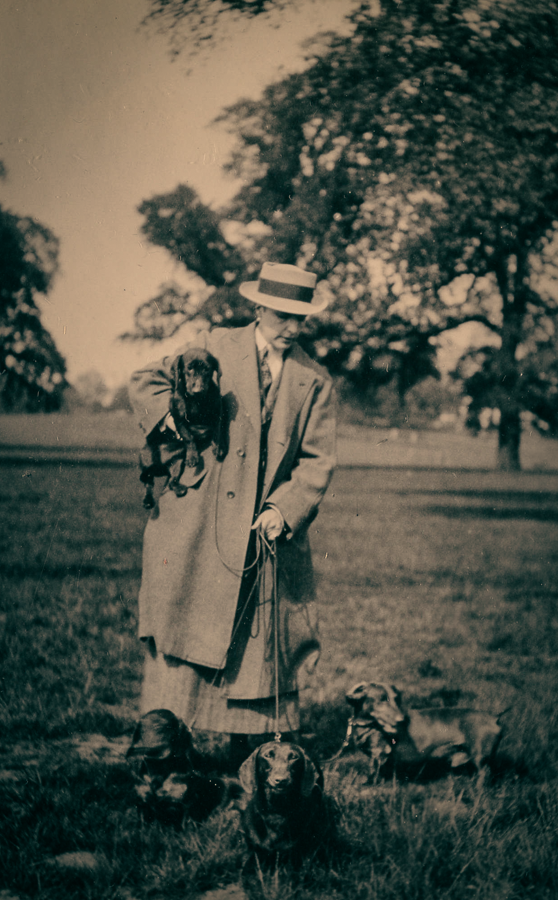
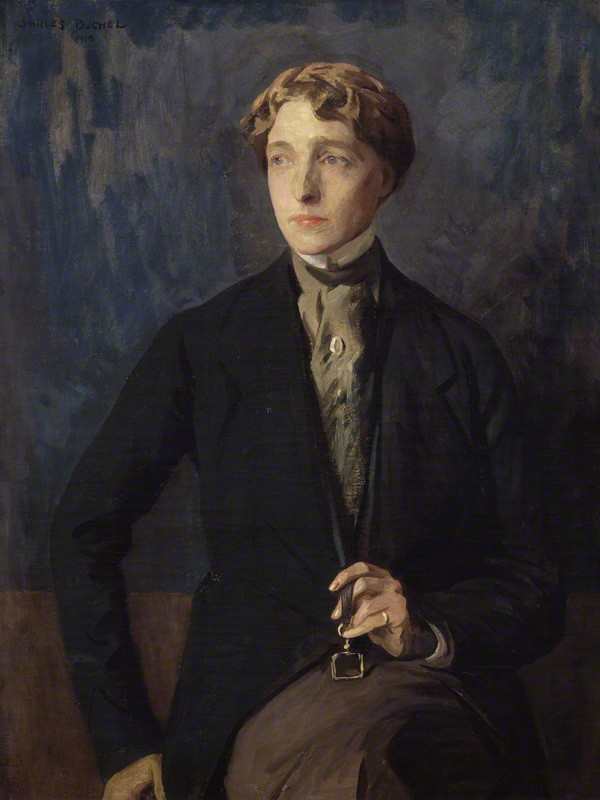
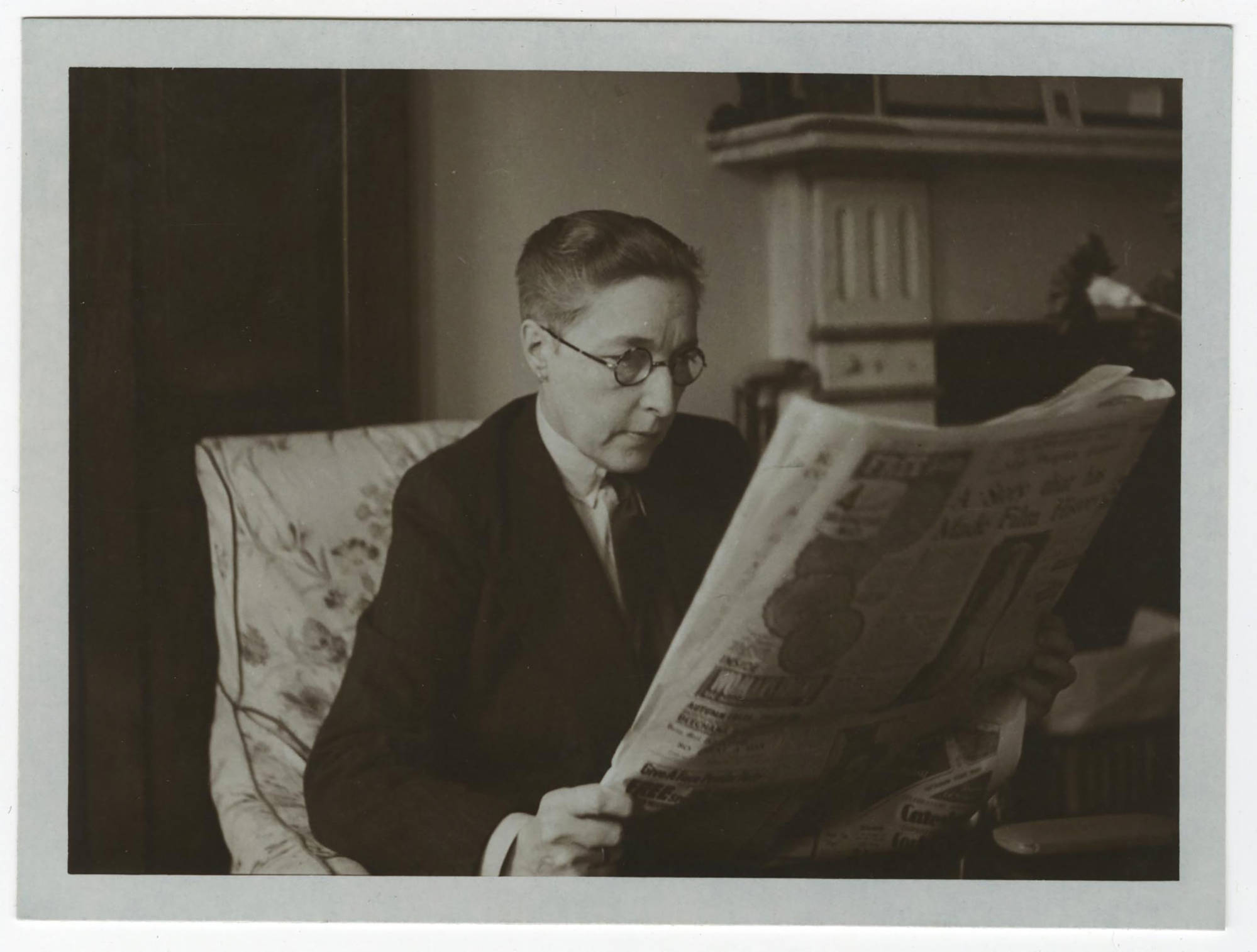
During this period Hall also developed much of her signature physical presentation. Mainly, she swapped the “fluffy confections” of her mother’s style with her father’s wardrobe of tweeds, starched collars and studded cuffs.12Souhami, Trials of Radclyffe Hall. Prior to the Malvern years her sporting clothes involved skirts and habits, in Malvern she switches to breeches – though only in private and during sport. In public the long skirts remained. Hall presented in a way that maintained strict boundaries in order to maintain a truthfulness to her masculinity without demanding to be identified as a man. According to Hall directly, reported via Dickson and Baker, Hall ranted about the case of ‘Colonel Barker’, a woman who claimed to be a man, deceiving a wife and several business partners.13Baker, Our Three Selves, 234, quoting letter from Radclyffe Hall to Audrey Heath, 27 February 1929. From today’s view of gender and sexuality – Hall claimed masculinity separately from her biological sex. On the other hand, Colonel Barker, in his claim of manhood, acts in a kind of falsehood, a lack of authenticity and therefore, reliable character.
The photographic archives of artists and writers in Britain, the US and parts of Europe at the time are filled with women sitting for portraits in their tailored suit jackets and uniform tops.14Jaime E. Hovey, “Gallantry and Its Discontents: Joan of Arc and Virtuous Transmasculinity in Radclyffe Hall and Vita Sackville-West,” Feminist Modernist Studies 1, no. 1–2 (2018): 113–137. Hall was not necessarily following a trend, but she did sit squarely in the most forward-facing, fashionable version of it. In Malvern the masculinity presented sat at the inner edge of acceptability. A style in line with the times that was authentic to herself.
I have chosen a hill very solemn and tall,
To shelter me.
I have chosen a home very humble and small,
Where I would be.
I have chosen a wind very fragrant and gay,
To kiss my mouth.
I have chosen a view, stretching ever away,
When I look south.
I have chosen a glow that the sunlight shall bring
When morning calls.
I have chosen a choir of the thrushes to sing
When twilight falls.
I have chosen a shrine where my spirit may pray,
Blessing its birth.
I have chosen a breast where my head I can lay,
Sweet Mother Earth!
‘My Choice’ in A Sheaf of Verses, 1908.
All the paraphernalia and responsibilities of domesticity were in reach whilst in Malvern. Her activities there were anchored around horse-riding and gardening, writing poems in the afternoon fused with the landscape she traversed by day.15Cline, A Woman Called John; Souhami, Trials of Radclyffe Hall, 30–31. By the Malvern years, the transition between Edwardian conventionality and Georgian experimentation – the countryside had and continued to be romanticised as the real England — simple-life traditions, restoration, physical health, in moral contrast to the polluted city.16Marion Shoard, A Right to Roam (Oxford: Oxford University Press, 1999); Donna Landry, The Invention of the Countryside: Hunting, Walking and Ecology in English Literature, 1671–1831 (Basingstoke: Palgrave/Springer, 2001); Paul Readman, Storied Ground: Landscape and the Shaping of English National Identity (Cambridge: Cambridge University Press, 2018); James Rebanks, English Pastoral: An Inheritance (London: Penguin, 2020).
Owning country homes gave Hall social legibility in a highly traditional sphere — by participating in the Ledbury and Old Croom hunts, she integrated herself into the masculine, county-level rituals of the local landowning class, commanding the respect of grooms, tailors, and figures like Colonel Llewellyn. It also allowed her the privacy to step into her cross-gendered identity. The homes ground the identity: time-honoured traditions of managing horse, hound, wife, and gable.
Though the self-fashioning continued long after the Malvern years, it was there she honed a skill to make herself a publicly legible figure – a figure the trials would later need to defend, her artistic and queer contemporaries would both lampoon and imitate, one whose self-presentation strategy is modelled upon, very much the ‘myth of the mannish lesbian’ that foregrounds much of the gender and queer theory generated a century later.17Esther Newton, “The Mythic Mannish Lesbian: Radclyffe Hall and the New Woman,” Signs: Journal of Women in Culture and Society 9, no. 4 (1984): 557–575; Teresa de Lauretis, “Perverse Desire: The Lure of the Mannish Lesbian,” Australian Feminist Studies 6, no. 13 (1991): 15–26; Judith Halberstam, Female Masculinity (Durham, NC: Duke University Press, 1998); Judith Butler, Gender Trouble: Feminism and the Subversion of Identity (London: Routledge, 2011).
They wore men’s Fedora hats, bought at Lock’s in St James’s Street, and knickerbockers and golf stockings, suitable apparel for a dog show, and each is holding round her midriff a dog, their entries for that particular show. Who could mistake them for anything but ‘queers’?
Lovat Dickson, writing from memory in 1975.
Baker, Michael. Our Three Selves: The Life of Radclyffe Hall. William Morrow & Company, 1985.
Butler, Judith. Gender Trouble: Feminism and the Subversion of Identity. London: Routledge, 2011.
Clarke, Robert Coningsby, and Marguerite Radclyffe-Hall. “The Blind Ploughman.” London: Chappell & Co., Ltd., 1913.
Cline, Sally. Radclyffe Hall: A Woman Called John. London: Faber & Faber, 1997.
de Lauretis, Teresa. “Perverse Desire: The Lure of the Mannish Lesbian.” Australian Feminist Studies 6, no. 13 (1991): 15–26.
Dellamora, Richard. Radclyffe Hall: A Life in the Writing. Philadelphia: University of Pennsylvania Press, 2011.
Dickson, Lovat. Radclyffe Hall at The Well of Loneliness: A Sapphic Chronicle. London: Collins, 1975.
Halberstam, Judith. Female Masculinity. Durham, NC: Duke University Press, 1998.
Hopwood, Paul. “Polite Patriotism: The Edwardian Gentleman in English Music, 1904 to 1914.” Nineteenth-Century Music Review 16, no. 3 (2019): 383–416.
Hovey, Jaime E. “Gallantry and Its Discontents: Joan of Arc and Virtuous Transmasculinity in Radclyffe Hall and Vita Sackville-West.” Feminist Modernist Studies 1, no. 1–2 (2018): 113–137.
Landry, Donna. The Invention of the Countryside: Hunting, Walking and Ecology in English Literature, 1671–1831. Springer, 2001.
Newton, Esther. “The Mythic Mannish Lesbian: Radclyffe Hall and the New Woman.” Signs: Journal of Women in Culture and Society 9, no. 4 (1984): 557–575.
Radclyffe-Hall, Marguerite. A Sheaf of Verses: Poems. London: John and Edward Bumpus Ltd., 1908.
———. Songs of Three Counties. London: Chapman and Hall, 1913.
Readman, Paul. Storied Ground: Landscape and the Shaping of English National Identity. Cambridge: Cambridge University Press, 2018.
Rebanks, James. English Pastoral: An Inheritance. London: Penguin, 2020.
Roche, Hannah. “An ‘Ordinary Novel’: Genre Trouble in Radclyffe Hall’s The Well of Loneliness.” Textual Practice 32, no. 1 (2018): 101–117.
Shoard, Marion. A Right to Roam. London: Oxford University Press, 1999.
Souhami, Diana. The Trials of Radclyffe Hall. London: Weidenfeld & Nicolson, 2014.
Troubridge, Lady Una. The Life and Death of Radclyffe Hall. London: Hammond Hammond, 1961.


Citations
- 1Robert Coningsby Clarke and Marguerite Radclyffe-Hall, ‘The Blind Ploughman’ (London: Chappell & Co., Ltd., 1913). On Chappell publication of the Sheaf volumes and the inclusion of ‘Take Me With You When You Fly’, see Michael Baker, Our Three Selves: The Life of Radclyffe Hall (New York: William Morrow & Company, 1985). On the 1913 Queen’s Hall performance, see Diana Souhami, The Trials of Radclyffe Hall (London: Weidenfeld & Nicolson, 2014).
- 2Hannah Roche, “An ‘Ordinary Novel’: Genre Trouble in Radclyffe Hall’s The Well of Loneliness,” Textual Practice 32, no. 1 (2018): 101–117.
- 3Roche, “An ‘Ordinary Novel’.”
- 4For context on these circles see Paul Hopwood, “Polite Patriotism: The Edwardian Gentleman in English Music, 1904 to 1914,” Nineteenth-Century Music Review 16, no. 3 (2019): 383–416.
- 5Lady Una Troubridge, The Life and Death of Radclyffe Hall (London: Hammond Hammond, 1961), 39; Baker, Our Three Selves, 58.
- 6Sally Cline, Radclyffe Hall: A Woman Called John (London: Faber & Faber, 1997).
- 7Marguerite Radclyffe-Hall, A Sheaf of Verses: Poems (London: John and Edward Bumpus Ltd., 1908); Lovat Dickson, Radclyffe Hall at The Well of Loneliness: A Sapphic Chronicle (London: Collins, 1975), 36.
- 8Dickson, Radclyffe Hall at The Well of Loneliness, 36, 42; Cline, A Woman Called John, 88.
- 9These claims are unsubstantiated by a cursory search of the indexes of the Athenaeum from 1906–1913. Troubridge, Life and Death of Radclyffe Hall, 28–29.
- 10Richard Dellamora, Radclyffe Hall: A Life in the Writing (Philadelphia: University of Pennsylvania Press, 2011), 51, citing Letter from Chappell & Co. Ltd., 13 June 1918, Lovat Dickson Collection, MG30, D237, vol. 4, folder 11.
- 11Troubridge, Life and Death of Radclyffe Hall, 41; Baker, Our Three Selves, 58.
- 12Souhami, Trials of Radclyffe Hall.
- 13Baker, Our Three Selves, 234, quoting letter from Radclyffe Hall to Audrey Heath, 27 February 1929.
- 14Jaime E. Hovey, “Gallantry and Its Discontents: Joan of Arc and Virtuous Transmasculinity in Radclyffe Hall and Vita Sackville-West,” Feminist Modernist Studies 1, no. 1–2 (2018): 113–137.
- 15Cline, A Woman Called John; Souhami, Trials of Radclyffe Hall, 30–31.
- 16Marion Shoard, A Right to Roam (Oxford: Oxford University Press, 1999); Donna Landry, The Invention of the Countryside: Hunting, Walking and Ecology in English Literature, 1671–1831 (Basingstoke: Palgrave/Springer, 2001); Paul Readman, Storied Ground: Landscape and the Shaping of English National Identity (Cambridge: Cambridge University Press, 2018); James Rebanks, English Pastoral: An Inheritance (London: Penguin, 2020).
- 17Esther Newton, “The Mythic Mannish Lesbian: Radclyffe Hall and the New Woman,” Signs: Journal of Women in Culture and Society 9, no. 4 (1984): 557–575; Teresa de Lauretis, “Perverse Desire: The Lure of the Mannish Lesbian,” Australian Feminist Studies 6, no. 13 (1991): 15–26; Judith Halberstam, Female Masculinity (Durham, NC: Duke University Press, 1998); Judith Butler, Gender Trouble: Feminism and the Subversion of Identity (London: Routledge, 2011).